Your Employees Are on Social Media. So Are the People Targeting Your Business.
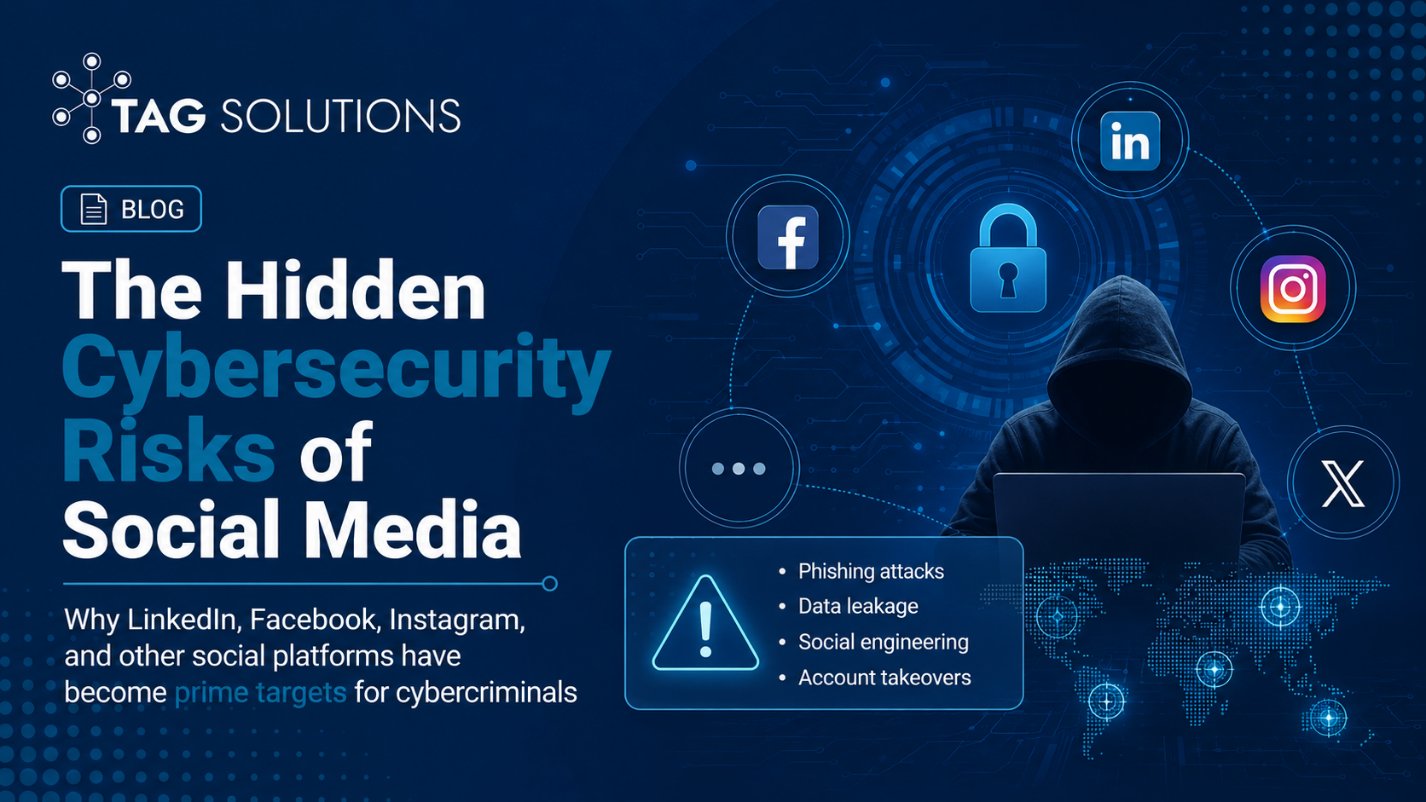
How LinkedIn, Facebook, Instagram, and other platforms have quietly become one of the most overlooked security risks for Albany businesses.
I had a conversation with a business owner a while back. Sharp guy, ran a professional services firm with about 60 people, had decent security in place - antivirus, email filtering, a firewall he paid good money for. He was proud of it, honestly. Then I asked him a simple question.
“When did you last look at your company the way an attacker would?”
He paused. Long pause.
We did the exercise together. Pulled up LinkedIn. Found his CFO, his IT coordinator, the name of their payroll vendor from a post someone had written about a software upgrade, the ERP system they were migrating to based on a job posting. All of it public. All of it sitting there for anyone to find. And nobody at his company had thought twice about any of it.
That’s where most businesses are right now. They’ve invested in the technical stuff and left the human layer wide open.
LinkedIn Is Not a Social Network. It’s an Intelligence Report.
Here’s the thing people miss about LinkedIn. Every profile an employee fills out is a puzzle piece. By itself, it seems harmless. Put enough of them together and you’ve got a detailed map of how a company operates - who reports to whom, what systems they run, which vendors they rely on, who’s new to the job and still trying to prove themselves.
Attackers know this. They’re good at it. They’ll spend a few hours on a Tuesday afternoon building a full picture of your organization before they ever send a single message or make a single phone call.
Your IT manager who listed the security tools your firm uses? He just told a threat actor exactly which gaps to look for. Your finance coordinator who mentioned the new accounting platform in her profile? She just confirmed which software vendor to impersonate. None of this is malicious on their part. They’re just doing what everyone does on LinkedIn. But the information is out there, and people are absolutely using it.
The vendor piece trips people up especially. Employees tag partners in posts, mention integrations, congratulate vendors on new products. All of that builds a picture of your third-party relationships. And a fake invoice from a company you genuinely do business with looks very different from one that comes out of nowhere.
Facebook and Instagram Do More Damage Than People Realize
Professional platforms get all the attention, and I get why. But Facebook and Instagram are often where the more personal reconnaissance happens. Spear phishing, the kind that actually works, is convincing because it references something real. A recent trip. A family event. A mention of a community group someone’s involved with.
Generic phishing is easy to spot. Most people can smell it. But when an email references your CFO’s daughter’s graduation that she posted about last weekend, or mentions a vendor your team just signed a contract with, it doesn’t feel like an attack. It feels like a normal message. That’s the whole point.
Employees who keep public personal profiles are handing over material that makes targeted attacks credible. Not because they’re careless. Because nobody told them this is how the process works.
The Attacks That Actually Come From This
Understanding what attackers collect is step one. Understanding what they do with it matters more.
Spear Phishing Built on Research
This is the one that shows up in my conversations with clients most often. An employee gets an email. It references a real project, uses the right names, mentions a vendor they work with regularly, and asks for something routine like a document approval or a wire transfer confirmation. The request is specific enough that it doesn’t trigger the usual alarm bells.
The reason it’s convincing is because someone spent time on LinkedIn and Facebook before they wrote it. That’s not sophisticated. It’s just patient.
Fake Profiles and Direct Outreach
LinkedIn in particular has a problem with fake profiles. Attackers build convincing personas - recruiters, industry contacts, vendor reps - and use connection requests to get into your employees’ networks. Once they’re connected, they can send messages that look legitimate, share links to sites that harvest credentials, or just have a normal-seeming conversation that slowly extracts information.
The reason this works is the platform itself. People treat LinkedIn differently than email. There’s a default of professional good faith that makes people less guarded. Attackers know that and use it on purpose.
Business Email Compromise
This one costs companies real money. The FBI’s Internet Crime Complaint Center publishes numbers on it every year, and BEC consistently shows up at the top of the list for financial losses. The setup is almost always the same: someone researches your organization, identifies the right people and the right workflow, and crafts an impersonation request that lands at exactly the right moment.
Social media is often where that research starts. Knowing that your CEO is traveling this week, your CFO is three months into the role, and your accounts payable team uses a specific approval process is enough to build something convincing. All of that can be found publicly if people aren’t careful about what they share.
The Quiet Risk That Nobody Talks About Enough
Social engineering gets the headlines. But there’s a slower, less dramatic version of this problem that I think gets overlooked.
Every day, employees share things that seem entirely harmless. A photo from a team lunch where a project whiteboard is visible in the background. A LinkedIn post celebrating a new software rollout that mentions the platform by name and describes the timeline. A comment about a client relationship intended to show professional accomplishment. None of those feel like security events. Taken together over time, they build a detailed picture of how your business operates.
And then there’s the credential piece. A lot of employees use the same password across personal and professional accounts. When a personal social media account gets compromised in a breach, and those accounts show up in breach databases constantly, that credential often works somewhere it shouldn’t. A VPN login. A company email. A cloud application. That’s not a personal inconvenience. That’s a business security incident.
A compromised employee account also becomes a platform. Messages from a real account, tied to a real person’s established network, carry a credibility that a cold outreach never could. Attackers use that access to reach further into an organization.
What Albany Businesses Can Actually Do About This
None of this requires locking down social media or building a culture where people are afraid to post anything. That approach creates friction and doesn’t actually work. What it requires is being deliberate.
Give People a Policy They Can Use
Most social media policies I’ve seen are either missing entirely or written by a lawyer for legal protection rather than actual guidance. A policy that employees can use answers practical questions: what shouldn’t be shared publicly, how to handle a connection request from someone you don’t know, what to do if a message feels off, and who to call if something goes wrong.
Short enough to read in ten minutes. Specific enough to actually help someone make a decision.
Train for Social Engineering, Not Just Phishing Emails
The training most companies run is built around email phishing. That’s necessary. It’s not enough. Social engineering happens over LinkedIn messages, phone calls from people who mention real colleagues and real projects, and direct messages on platforms people think of as personal. The training that actually changes behavior uses realistic examples, not generic scenarios that feel nothing like what employees actually encounter.
Role-specific training is worth the extra investment. An executive assistant with wire transfer access is a different target than a software developer with repository credentials. Treating everyone as one audience means the training is relevant to no one in particular.
Look at Your Company the Way an Attacker Would
This is the exercise I run with clients and the one that usually surprises them most. Search your company name. Search your key executives. Search your most sensitive departments. Look at what employee profiles collectively reveal about your systems, your vendors, your internal structure, and your current projects.
The results are almost always more detailed than leadership expects. That audit is the starting point for a real conversation about where the exposure actually is and what’s worth addressing.
Layer in the Technical Controls
Policy and training reduce the likelihood of an attack succeeding. Technical controls reduce the damage when one does. MFA on business-critical accounts. A credential management solution that prevents password reuse. Email authentication that makes sender impersonation harder. A verification process for any financial transaction that originates through digital channels.
None of this is exotic. It’s consistent implementation and a willingness to take the human layer as seriously as the technical one.
Think Beyond Your Own Organization
Your security posture is only part of the picture. If a vendor’s employee gets compromised and your team considers that vendor a trusted source, the attack can arrive through a channel you never thought to question. Vendor security reviews, clear procedures for verifying requests regardless of where they appear to come from, and second-channel confirmation for significant transactions reduce what happens when third-party exposure goes sideways.
Where This Fits in the Bigger Picture
Social media risk doesn’t sit in a corner by itself. It connects directly to your phishing exposure, your BEC risk, your credential hygiene, and your overall posture around the human layer of your security. Organizations that treat it as a separate issue tend to end up with point solutions that address the symptoms without touching the actual problem.
The way I frame it for clients is pretty simple: your employees are your most visible attack surface, and social media is the easiest way for someone to learn how to exploit them. A security program that invests heavily in technical controls and treats the human layer as an afterthought has a gap that those controls can’t close.
Every Albany business, regardless of size or sector, is operating in the same threat environment. A 50-person firm whose managing partner has a detailed LinkedIn profile and whose employees post regularly about client work is carrying real exposure. The size of the organization changes the scale of the target. It doesn’t change the nature of the risk.
The businesses that handle this well aren’t the ones that shut social media down. They’re the ones that take a systematic approach: understanding what their digital footprint reveals, training people on realistic scenarios, putting the right controls in place, and checking in regularly as the threat landscape changes.
How TAG Solutions Helps With This
TAG Solutions has worked with Albany and Capital Region businesses for more than 30 years. Social engineering risk sits right at the intersection of technical security and organizational behavior, and it takes a partner who understands both sides of that.
Every TAG client works directly with a vCIO, someone whose job is to think about technology decisions the way a senior executive would. That includes the security conversation. Not just recommending tools, but helping organizations understand where their real exposure is, build the policy and training structure that addresses it, and implement the technical controls that reduce the damage when something gets further than it should.
If your organization hasn’t seriously looked at what your employees’ social media presence reveals about your business, that’s a conversation worth having before an incident makes it urgent.

TAG Solutions works with Albany and Capital Region businesses to assess cybersecurity exposure, reduce risk, and build a security posture that protects what they’ve built.
Quick Q&A: Social Media Cybersecurity for Albany Businesses
Is this really relevant to a small or mid-sized business?
More so, in some ways. Smaller businesses often have less formal security infrastructure, which makes social engineering more likely to work. Attackers don’t know your headcount before they start researching. They find you through a visible profile or a public post and work from there.
Should we tell employees to stop posting on LinkedIn?
Blanket restrictions create friction and don’t actually reduce risk proportionally. A better approach is clear guidance on what kinds of information create real exposure and why. Most people adjust their behavior when they understand what’s at stake. The goal is informed judgment, not a prohibition.
How does this connect to Business Email Compromise?
BEC is built on organizational intelligence, and social media is one of the most reliable places to gather it. An attacker who knows your CFO, your payables process, and your vendor relationships has most of what they need to build a convincing impersonation. BEC stays at the top of the FBI’s loss rankings because that setup work makes the attack credible.
What’s the single most useful thing to do right now?
Run the exercise. Search your company name and your key executives the way an attacker would. Look at what employee profiles reveal collectively about your systems, your vendors, and your internal structure. That baseline tells you where the real exposure is and where to focus from there.
Is MFA enough to address the credential risk?
MFA significantly reduces the chance that compromised credentials lead to a breach, but it’s one layer of a broader posture. Password reuse across personal and professional accounts, account takeover used for social engineering rather than direct system access, and attacks that go around technical controls by targeting people directly are all risks that MFA alone doesn’t solve. The most durable protection combines technical controls with training and policy.